Thermodynamic
Digital Engine
Thermodynamic intelligence for steelmaking,
with structural awareness built in.
Thermodynamic intelligence for steelmaking, with structural awareness built in.
In modern steel production, process control alone is no longer sufficient. Steel plants need tools capable not only of interpreting thermodynamic and metallurgical phenomena, but also of understanding how those phenomena affect the physical condition, operational margin, and structural safety of the equipment itself.
This is the philosophy behind TDE™ – Thermodynamic Digital Engine.
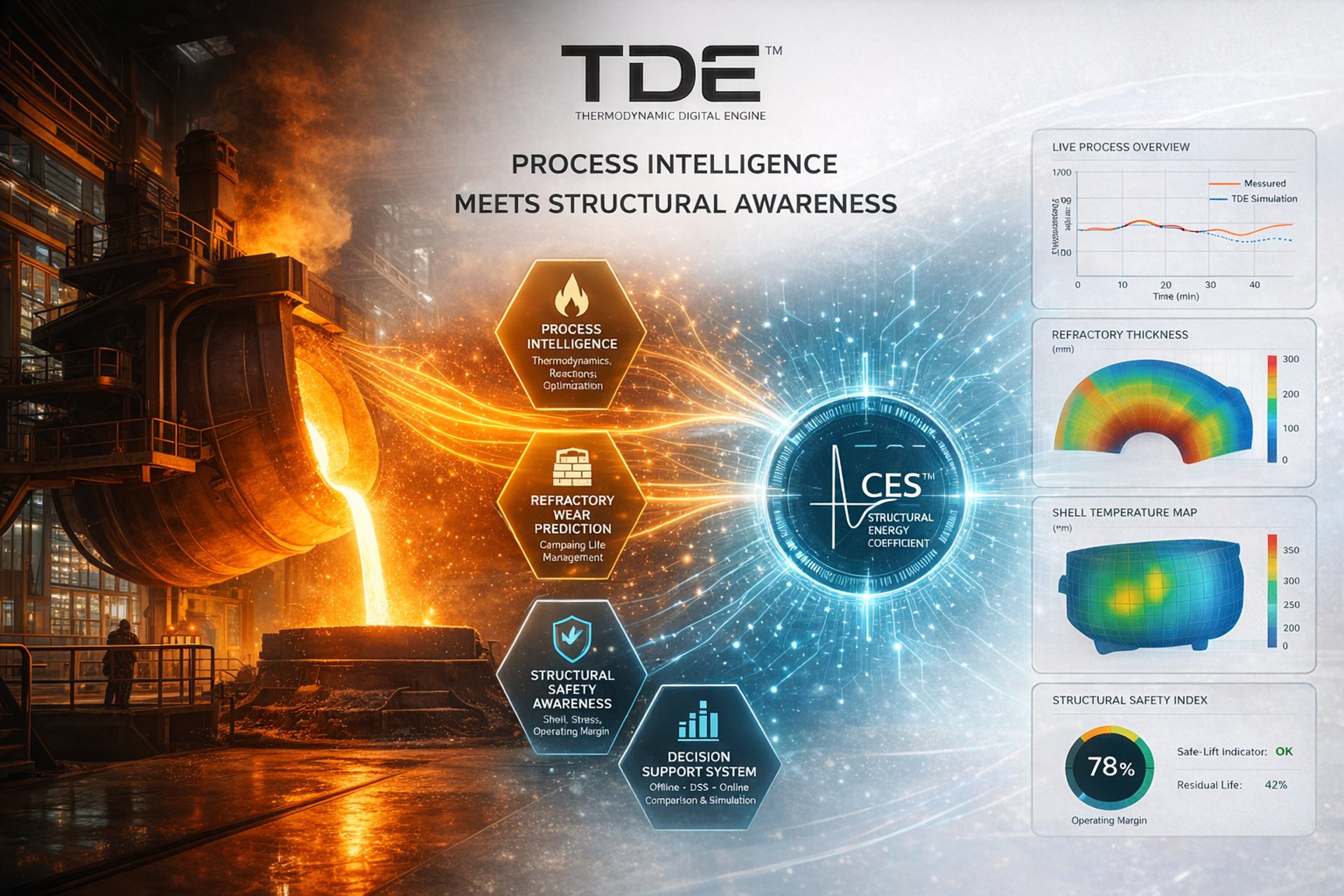
TDE is conceived as an advanced computational framework for steelmaking process simulation, decision support, and progressive digital twin implementation. Its purpose is not limited to optimizing chemical reactions, thermal balance, gas consumption, or refractory campaign performance. Its distinctive value lies in combining process intelligence with structural awareness, creating a higher level of operational understanding for furnaces, converters, ladles, and vacuum metallurgy units.
Through its integration with the CES™ engine, TDE extends beyond conventional process models by introducing an additional interpretative layer focused on the structural energy state of the equipment. This means that process evolution is not evaluated only in terms of metallurgical efficiency, but also in terms of what that process is doing to the vessel, the lining, the shell, and the machine’s residual operating margin. CES is explicitly framed as a complementary energetic-structural diagnostic tool rather than a code-compliance substitute.
This dual perspective makes TDE especially relevant for existing industrial assets already in operation. Many furnaces and converters were designed to produce steel efficiently, but not to provide a deep, predictive, and integrated understanding of decarburization control, refractory degradation, shell thermal state, and structural exposure. TDE is designed to fill that gap.
At the same time, TDE is built around a pragmatic and low-risk adoption philosophy. Industrial users are not required to commit immediately to full automation or closed-loop integration. The technology can be introduced progressively: first as an offline simulator for what-if analysis and technical benchmarking, then as a Decision Support System (DSS) operating in advisory mode alongside the existing plant automation, and only later, where validated and desired, as a more integrated online Digital Twin. This staged approach is a recurring architectural principle across the TDE methodology documents.
This implementation path is particularly important because it allows TDE to create value even in plants that already have advanced digital systems in place. In such cases, TDE does not need to replace the existing intelligence layer. It can operate in parallel, providing independent comparison, real-time simulation, thermodynamic verification, and a second level of technical interpretation for critical operational decisions.
The TDE website is therefore structured around the two main steelmaking routes:
carbon steel route and stainless steel route.
Within these two routes, TDE is presented not as a generic software platform, but as a family of specialized thermodynamic engines developed to support real industrial processes with a more refined, more transparent, and more technically integrated approach.
TDE is not only about predicting the process.
It is about understanding the process, validating the process, and monitoring what the process is doing to the machine itself.
That is where thermodynamic intelligence becomes industrial intelligence.
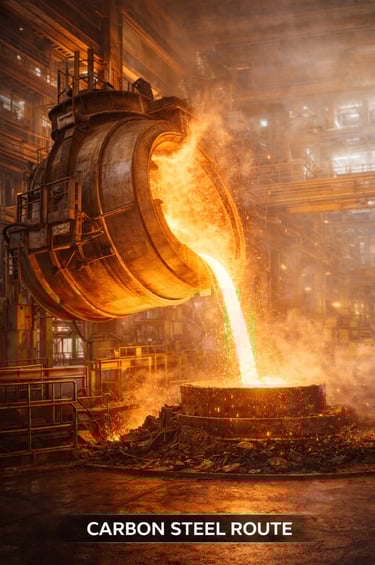
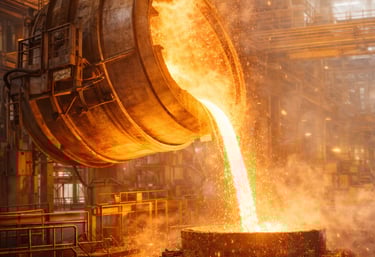
TDE™ for Carbon Steel Route
Advanced thermodynamic and metallurgical support for carbon steel production, from primary melting and refining to ladle treatment and vacuum metallurgy.
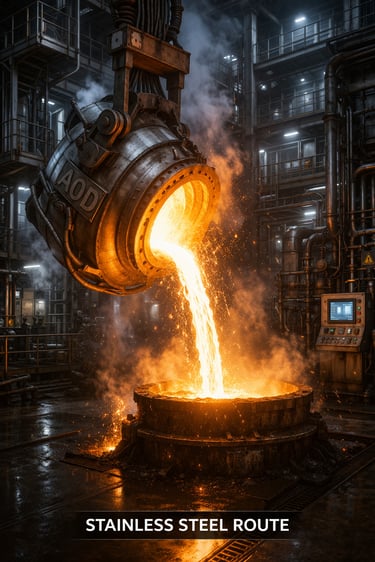
TDE™ for Stainless Steel Route
Advanced thermodynamic and metallurgical support for stainless steel production, from primary melting to AOD refining, vacuum treatment and final chemistry adjustment.
TDE can be adopted safely, steps by steps
TDE does not need to replace your current automation to create value.
It can start as an independent thermodynamic intelligence layer, running in parallel with your existing system.
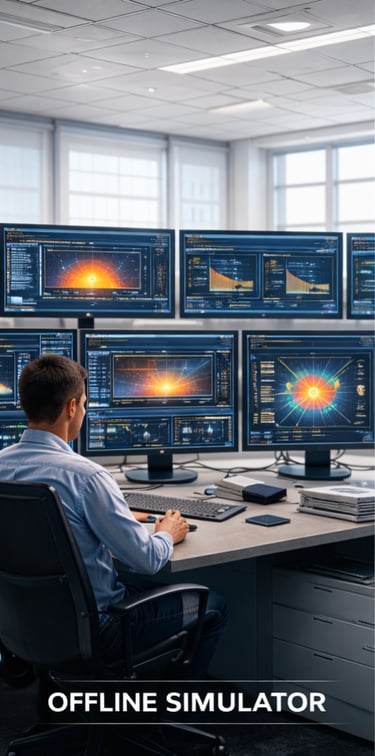
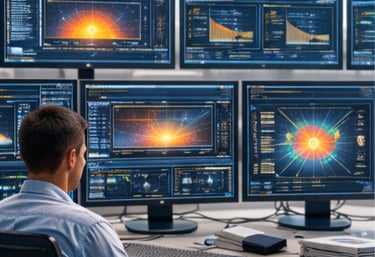
Step 1 - Offline Simulator
Offline thermodynamic simulation for scenario analysis, recipe comparison and process benchmarking.
First, verify. Then, trust. Then, integrate.
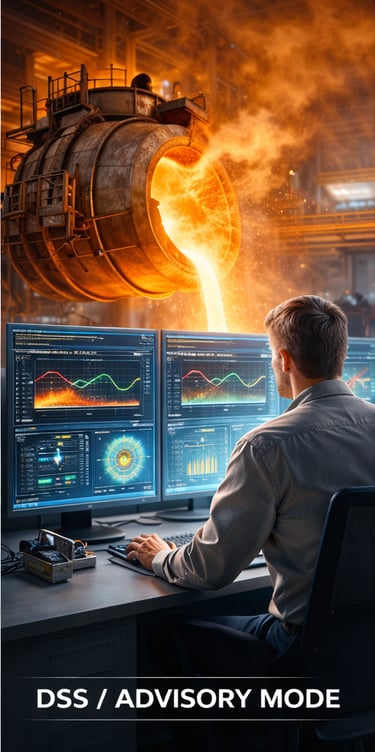
Step 2 - DSS / Advisory Mode
Real-time process monitoring, simulation comparison and decision support in parallel with existing plant operations.
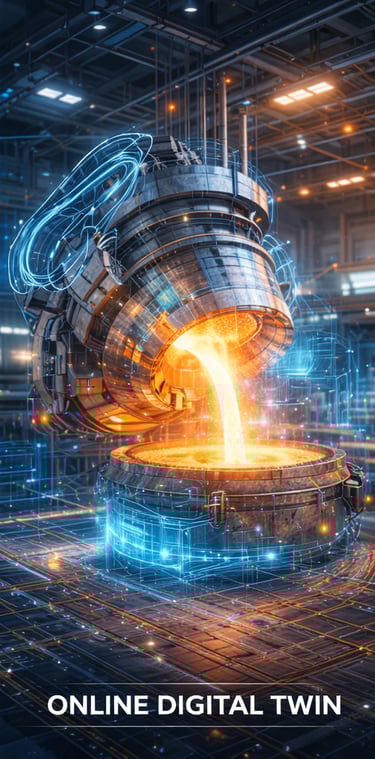
Step 3 - Online Digitall Twin
Integrated thermodynamic digital twin for real-time process optimization, predictive control and full system awareness.
Stay Informed
Get updates on TDE advancements and industry insights
Contact
IDECO Mining and Metallurgy Inc.
Str. Depoului, nr. 16
Ploiesti, Jud. Prahova
100335 Romania
Phone
+36 70 522 1235
+40 75 368 2658
© 2026. All rights reserved.